
Embark on your paddling journey with Kayaking and Canoeing for Beginners. Discover the excitement and serenity of these water activities as we delve into the essentials for newcomers.
Learn about the gear, skills, safety measures, and more to kickstart your kayaking and canoeing experience on the right note.
Introduction to Kayaking and Canoeing
Kayaking and canoeing are both popular water activities that offer individuals the opportunity to explore the outdoors and enjoy nature from a unique perspective. While they may seem similar, there are key differences between the two.
Differences between Kayaking and Canoeing
- Kayaking involves the use of a kayak, which is typically a closed-deck boat where the paddler sits inside and uses a double-bladed paddle.
- Canoeing, on the other hand, utilizes a canoe, an open-deck boat where the paddler kneels or sits on a raised seat and uses a single-bladed paddle.
- Kayaks are generally more maneuverable and faster, while canoes offer more storage space and are often used for leisurely paddling.
Basic Gear Needed for Beginners
- Personal Flotation Device (PFD): A must-have for safety on the water.
- Paddle: Choose the appropriate paddle based on the type of activity (single-bladed for canoeing, double-bladed for kayaking).
- Appropriate Clothing: Quick-dry clothing, water shoes, and a hat are recommended.
- Sun Protection: Don’t forget sunscreen, sunglasses, and a hat to protect yourself from the sun’s rays.
Benefits of Kayaking and Canoeing
- Physical Health: Paddling engages various muscle groups, improves cardiovascular fitness, and enhances overall strength and endurance.
- Mental Health: Being out on the water can reduce stress, promote relaxation, and provide a sense of tranquility and connection with nature.
- Social Interaction: Kayaking and canoeing can be enjoyed solo for introspection or with friends and family for a fun bonding experience.
Popularity of Kayaking and Canoeing
- With the increasing interest in outdoor activities and eco-tourism, kayaking and canoeing have gained popularity as accessible and enjoyable water sports for people of all ages.
- Many natural parks, lakes, rivers, and coastal areas offer opportunities for kayaking and canoeing, making them convenient recreational options for outdoor enthusiasts.
- Events like kayak races, canoe tours, and paddling festivals attract participants and spectators, further contributing to the popularity of these activities.
Getting Started: Essential Skills and Techniques
Kayaking and canoeing are exciting water activities that require some essential skills and techniques to ensure a safe and enjoyable experience. In this section, we will cover the fundamental paddling techniques for beginners, how to safely enter and exit a kayak or canoe, how to maintain balance and proper posture while paddling, and share tips for navigating different types of water bodies.
Fundamental Paddling Techniques
- Hold the paddle correctly with one hand on the shaft and the other on the top of the paddle.
- Engage your core muscles and use a rotating motion to paddle effectively.
- Practice different strokes such as forward stroke, backward stroke, sweep stroke, and draw stroke for maneuvering.
Safely Entering and Exiting a Kayak or Canoe
- Approach the kayak or canoe from the side and place your paddle across the boat for stability.
- Sit on the edge of the boat and slowly slide into the cockpit or seat while maintaining balance.
- To exit, paddle to the shore or a stable surface, and reverse the process by carefully stepping out of the boat.
Maintaining Balance and Proper Posture
- Keep your back straight and your knees bent while paddling to maintain stability and reduce strain on your lower back.
- Distribute your weight evenly in the boat and engage your core muscles to stay balanced on the water.
Tips for Navigating Different Water Bodies
- On calm lakes or ponds, focus on smooth and steady paddling to move efficiently across the water.
- In rivers or streams, use the current to your advantage and practice maneuvering around obstacles with quick paddle strokes.
- When paddling in the ocean, be aware of tides, currents, and wind conditions to plan your route and stay safe on the water.
Choosing the Right Equipment
When it comes to kayaking and canoeing, having the right equipment is essential for both safety and enjoyment on the water. Let’s explore the key factors to consider when selecting equipment for beginners.
Types of Kayaks and Canoes
- Recreational Kayaks: These kayaks are stable, easy to maneuver, and perfect for beginners. They are ideal for calm waters such as lakes and slow-moving rivers.
- Touring Kayaks: Longer and narrower than recreational kayaks, touring kayaks are designed for longer trips and offer better speed and tracking.
- Whitewater Kayaks: Short and maneuverable, whitewater kayaks are built to handle fast-moving rivers and rapids. They require more skill and experience to navigate effectively.
- Canoe: Canoes are open boats typically paddled with a single-bladed paddle. They are versatile and can accommodate multiple paddlers or gear for longer trips.
Paddle Materials and Sizes
- Materials: Paddles can be made of aluminum, fiberglass, carbon fiber, or wood. Fiberglass and carbon fiber paddles are lighter and more durable, while aluminum paddles are more affordable.
- Sizes: Choose a paddle length that is comfortable for your height and the type of paddling you will be doing. A general rule of thumb is to choose a paddle that is 8-10 inches taller than you.
Safety Gear
- Life Jackets: Also known as personal flotation devices (PFDs), life jackets are essential for all paddlers, especially beginners. Make sure to choose a comfortable and properly fitting life jacket that is Coast Guard approved.
- Helmets: For whitewater kayaking or canoeing, wearing a helmet is crucial to protect your head in case of capsizing or hitting rocks. Look for helmets specifically designed for paddling sports.
Maintenance and Storage
- Rinse: After each use, rinse your kayak or canoe with fresh water to remove any salt or dirt that could cause damage over time.
- Storage: Store your kayak or canoe in a cool, dry place away from direct sunlight. Consider using a cover to protect it from dust and debris when not in use.
- Repairs: Check your equipment regularly for any signs of wear or damage, and make repairs as needed to ensure safe paddling experiences.
Safety Tips and Precautions
Kayaking and canoeing can be exciting outdoor activities, but it’s crucial to prioritize safety at all times. Here are some essential tips and precautions to keep in mind:
Identifying Common Safety Hazards
- Always wear a personal flotation device (PFD) to ensure buoyancy in case of an accidental flip or capsizing.
- Be aware of your surroundings and potential obstacles in the water, such as rocks, branches, or strong currents.
- Avoid kayaking or canoeing alone, especially as a beginner, and always inform someone of your planned route and expected return time.
Assessing Weather Conditions
Before heading out on the water, it’s essential to check the weather forecast and assess current conditions. Avoid kayaking or canoeing in severe weather, high winds, or stormy conditions. Always prioritize safety over the desire to paddle.
Importance of Appropriate Clothing and Footwear
Wearing the right gear is key to staying safe and comfortable while kayaking or canoeing. Opt for quick-drying clothing to stay warm even when wet, and wear water shoes or sandals with good traction to prevent slipping on wet surfaces.
Dealing with Capsizing or Emergencies
- If you capsize, stay calm and try to right your kayak or canoe. Practice self-rescue techniques beforehand to feel more confident in handling such situations.
- In case of an emergency, signal for help using a whistle, waving your arms, or shouting loudly. Carry a first aid kit and know basic emergency procedures.
Choosing the Right Location
When it comes to kayaking and canoeing as a beginner, choosing the right location is crucial for an enjoyable and safe experience on the water.
Types of Suitable Water Bodies
- Rivers: Slow-moving rivers with calm waters are ideal for beginners to practice paddling and navigation skills.
- Lakes: Small to medium-sized lakes provide a serene environment for beginners to learn and enjoy kayaking or canoeing.
- Ponds: Quiet ponds with minimal boat traffic are perfect for beginners to build confidence and skills on the water.
Researching Water Conditions and Regulations
Before heading out to a specific location, it is essential to research the water conditions, including currents, tides, and any potential hazards. Additionally, familiarize yourself with local regulations and rules regarding watercraft activities to ensure a safe and legal paddling experience.
Beginner-Friendly Destinations
- State Parks: Many state parks offer designated areas for kayaking and canoeing, providing beginner-friendly access to water bodies with proper facilities and safety measures.
- Recreational Areas: Look for recreational areas or nature preserves that cater to paddlers of all skill levels, offering calm waters and scenic surroundings for a pleasant outing.
Respecting Nature and Wildlife
When paddling in natural environments, it is important to respect nature and wildlife by following Leave No Trace principles. Avoid disturbing wildlife, refrain from littering, and paddle quietly to minimize your impact on the ecosystem. Remember, we are guests in their habitat.
Joining a Kayaking or Canoeing Group
Joining a kayaking or canoeing club or group can offer numerous benefits for beginners looking to enhance their paddling experience. Not only can it provide a sense of community and camaraderie, but it also offers opportunities for skill development, safety in numbers, and access to valuable resources.
Finding Local Kayaking and Canoeing Communities
When looking to join a kayaking or canoeing group, start by checking local outdoor recreation websites, social media platforms, or outdoor stores for information on clubs or meet-up groups in your area. You can also inquire at nearby lakes, rivers, or marinas for recommendations on local paddling communities.
Enhancing the Overall Experience for Beginners
- Group paddling allows beginners to learn from more experienced paddlers, who can offer tips on technique, safety, and navigation.
- Being part of a group can provide a sense of security and support, especially for those new to the water.
- Group outings can introduce beginners to new paddling locations and routes, expanding their knowledge and skills.
Participating in Organized Kayaking and Canoeing Events
- Joining organized events such as group paddles, races, or training sessions can help beginners develop their paddling skills in a structured and supervised environment.
- Participating in events can also foster a sense of accomplishment, boost confidence, and create lasting memories with fellow paddlers.
- Look for local or regional kayaking and canoeing events online or through community bulletin boards to get involved and meet like-minded individuals.
Last Word
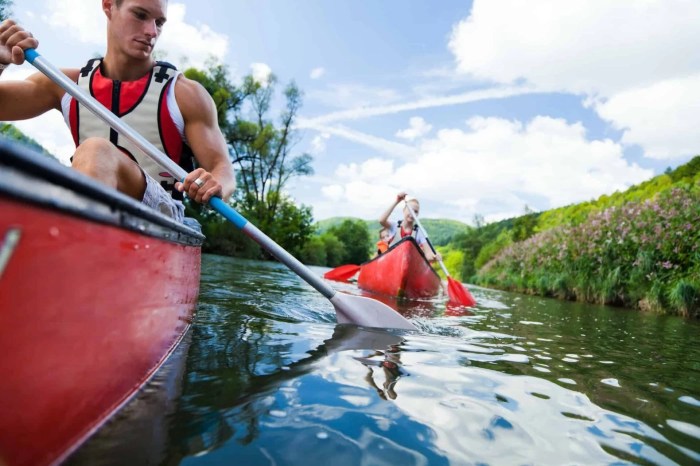
Dive into the world of kayaking and canoeing armed with newfound knowledge and confidence. Start your outdoor adventures on the water with a splash, embracing the tranquility and thrill these activities have to offer.
Helpful Answers
What are the key differences between kayaking and canoeing?
Kayaking involves sitting inside a closed kayak using a double-bladed paddle, while canoeing typically involves an open canoe with a single-bladed paddle.
How do I choose the right safety gear for kayaking and canoeing?
Ensure you have a properly fitting life jacket, helmet, and any other required safety equipment based on the water conditions and regulations.
What should I do in case of capsizing while kayaking or canoeing?
Stay calm, hold onto your kayak or canoe, and try to flip it back over. If needed, signal for help and follow proper rescue procedures.


